
Small Business Website Design: The Pages Every Creative Business Needs

A beautiful brand won’t get far if your website leaves people wondering what you do or how to hire you. Your online home should feel like stepping into your studio on your best day: welcoming, clear, and confident. When each page has a clear job, your site starts doing real work for you in the background: warming up leads, answering their questions, and gently pointing them toward working with you.
Many creative business websites end up feeling like a catch-all: a random mix of old blog posts, outdated services, and half-finished portfolios. Over time, that makes your brand look less polished than the quality of your work.
You don’t need a huge site to fix that. You need a handful of core pages, planned with care and written with your ideal client in mind. This is the foundation of effective small business website design. Let’s walk through the essential pages every creative business needs, what each one is responsible for, and what to include so your website finally matches the level of your work.
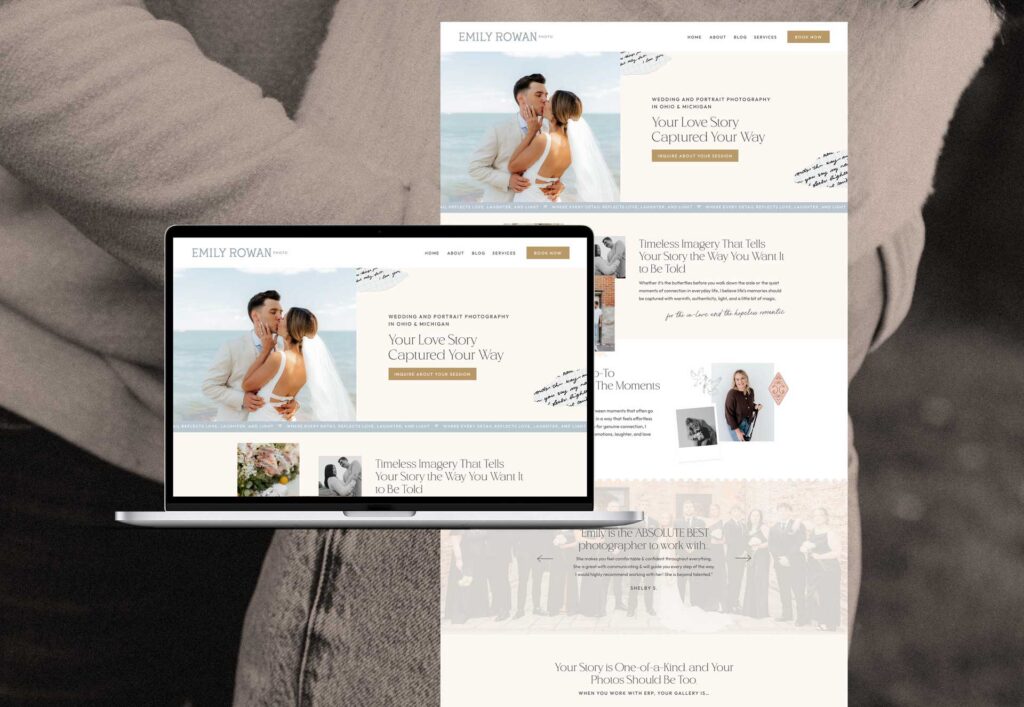
The Home Page: The Most Important Page in Small Business Website Design
Clear, Direct, and Visitor-Focused
Your Home page is usually the first page someone sees. When a potential client clicks over from Instagram, Google, or a referral, they should understand within a few seconds who you are, what you do, and where to go next. The Home page has one main job: answer three questions quickly in a way that feels easy and obvious.
Who is your offering for?
Help visitors recognize themselves right away. You can do this with a simple, direct headline. For example: “Brand and web design for creative women ready to look as professional online as they are in real life.” If you work with specific industries like product-based businesses, wedding pros, or coaches, say that! Clear positioning is a core part of strong small business website design.
What do you do?
Your hero headline should name what you offer and hint at the transformation your work creates. Instead of a generic “Welcome to my website,” you might say: “Thoughtful wedding planning that lets you actually enjoy your engagement,” or “Brand photography that makes your business look as professional as it feels.” This tells a visitor what you do, who it’s for, and why it matters without making them dig for information.
What should a visitor do next?
Once someone understands what you do, they need a clear path. Your Home page should act as a simple overview of your site, not a full deep dive. Offer small previews of your key pages: a short description of your services, a quick look at recent work, a sentence or two about your approach, and a straightforward invitation to inquire or learn more.
Weave in a bit of social proof with two or three short testimonials, a line about a client result, or logos of places your work has been featured. You don’t need much here, just enough to create trust and curiosity.
Most importantly, let the tone, imagery, and design of your Home page reflect how it feels to work with you. That alignment between experience and visuals is what makes small business website design feel cohesive and trustworthy.
The About Page
Telling Your Story With a Purpose
Once visitors feel interested, they often head straight to your About page. They’re trying to figure out who they’d actually be working with and whether your story, style, and energy match what they’re looking for.
An effective About page shares who you are, but it frames everything around your reader and their needs.
Share your story with intention.
People care about your background, but they mostly want to know how it helps them. When you describe how you started your business or shifted into your current niche, connect it to what your clients are going through.
If you are a photographer, maybe you started because you were tired of stiff, overly posed images and wanted to capture real connection. If you are a coach, maybe you launched your practice after navigating burnout and realizing other women needed a space to talk honestly about work and life. Details like this show you understand their experience and that your work is designed to support them.
Describe your approach and values.
Use this page to explain what it’s like to work with you. Do you bring calm direction to emotional seasons like wedding planning or big life transitions? Do you like to collaborate closely, or do clients hire you to take the lead once the vision is clear?
Share the values that shape your process – things like communication, timelines, creative direction, or inclusivity. This helps potential clients decide early on if you’re the right fit, which makes everything smoother when they do inquire.
Let your personality come through.
A few specific personal details make you memorable and human. You might mention your love of Lake Michigan summers, your obsession with color palettes inspired by sunsets, or your ideal Saturday morning routine. These do not need to take over the page, but they help visitors feel like they’re meeting an actual person, not just a brand.
Close with a clear next step linking to your Services page, Portfolio, or Contact page. Someone who has read this far is already interested, so make it easy for them to keep going!
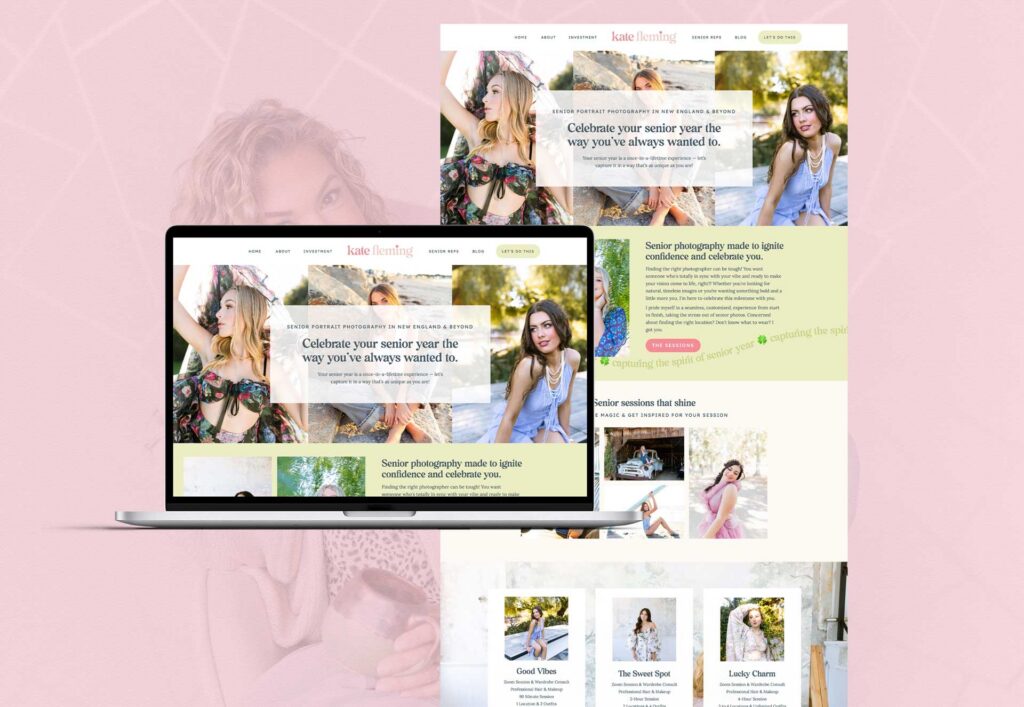
The Services and Investment Page
Sharing Clear Offers with Clear Pricing
Your Services page is the place where curiosity turns into genuine consideration. Visitors are asking themselves whether you offer what they need and whether your services are within reach for their budget. This is where thoughtful small business website design and strategy really work together.
Outline your offers clearly.
Each main service or package should be presented in a way that’s simple to scan and understand. Give every offer a clear title, a short description focused on benefits, and a straightforward explanation of what’s included. Then spell out who the offer is best for so visitors can see themselves in it.
For example, instead of listing “Package One, Package Two, Package Three,” you might use names like:
“Full-Service Wedding Planning / For couples who want expert support from first inquiry to the last dance.” or “Brand Photography Session / For business owners ready for a gallery of images they can use across their entire online presence.”
Then explain what’s included and, whenever possible, connect each element to an outcome: timelines that reduce stress, planning tools that save time, images that make marketing easier, or coaching calls that lead to clear action steps. Clients aren’t just paying for hours or deliverables, they’re paying for confidence, clarity, and ease in their own lives or businesses.
Be upfront about investment on your services page.
You don’t have to publish structured pricing if your work is dependent on the client, but sharing at least a starting price or typical range is respectful and professional. You can say something like, “Wedding photography collections begin at $X, with most couples investing between $X–$Y,” or “Strategy sessions start at $X.”
This simple detail sets expectations, filters out mismatched inquiries, and positions your services as a considered investment, not a casual add-on. Clear investment information is one of the most overlooked elements in effective small business website design.
Make the next step feel easy.
End each service description with a warm, low-pressure call to action. Invite visitors to inquire, book a discovery call, or share more about their project. Use language that sounds like a conversation: “Interested in working together? Share a few details about your plans and I’ll follow up with next steps.” You’re opening a door, not demanding a commitment on the spot.
Your Portfolio Website Page
Showing Your Work, Proof, Results, and Style
Your Portfolio or Galleries page is where visitors look for proof that you can deliver on what you describe. This type of web page is especially important for creatives, where visuals and final results carry a lot of weight.
A strong portfolio is curated. It shows the kind of work you want to keep attracting, not every single project you’ve ever done.
Show work that reflects where you’re headed.
If a past project no longer matches your style, your quality, or the type of clients you want now, it doesn’t have to be featured. Choose examples that align with your current aesthetic, demonstrate range within your style, and speak directly to your ideal client.
A wedding photographer might showcase a mix of intimate elopements and full wedding days that all share a similar emotional tone. A designer might highlight interiors that reflect the same relaxed yet elevated feel. A coach might feature client stories and transformation snapshots instead of photos alone.
Add context to each project.
Don’t rely on visuals alone. Share a short overview for each project: who the client is, what they needed, and how you approached the work. If you can, include a tangible result. That could be a fully booked season, more aligned inquiries, repeat clients, or simply how your client felt at the end of the process.
For example, you might describe how a wedding planning couple went from overwhelmed to excited, or how a brand photography client finally felt confident showing up online after your session. These specifics help visitors imagine what similar work could do for them.
Make it simple to explore and to inquire.
Group projects in a way that matches your offers: weddings, families, brands; interiors, consulting, styling; group programs, 1:1 coaching, intensives. Use clear titles and short descriptions so visitors can quickly find what they’re interested in.
Then, add a clear path forward. Invite them to view your Services page or inquire about working together. When someone is impressed by your work, they should never be left wondering what to do next.
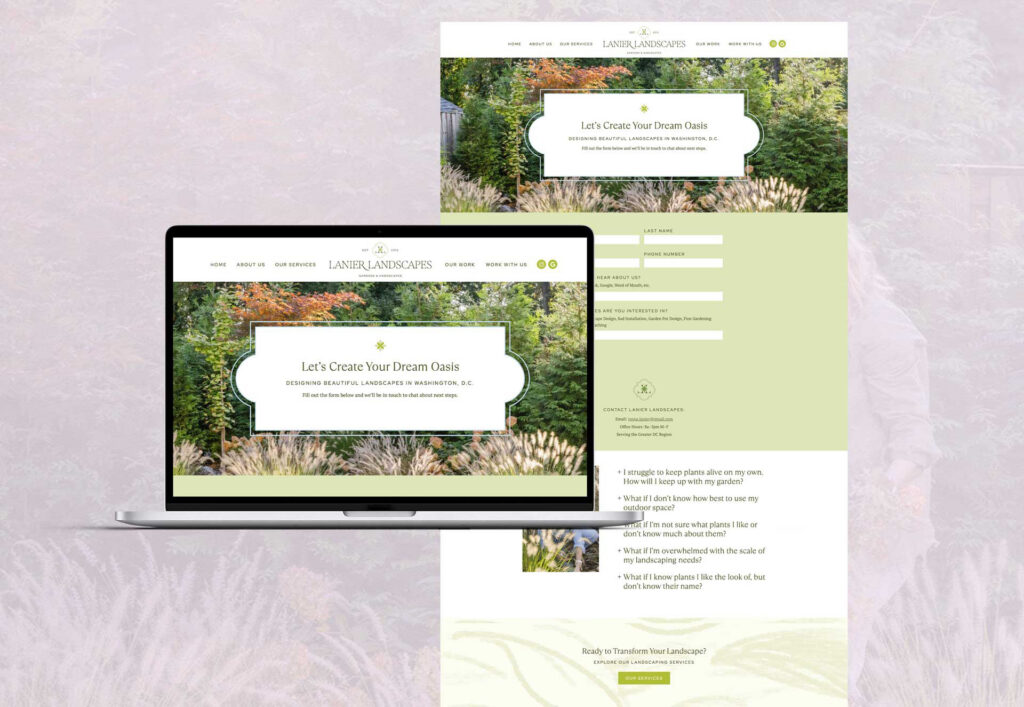
The Contact Page
Your Contact page is usually short, but it’s powerful.
This is the moment someone raises their hand and says, “I think I might want to work with you.” The page should feel straightforward, welcoming, and organized.
Set expectations with a short intro.
Open with a simple, human paragraph that explains what to do and what happens next. For example: “Tell me about your project, your ideas, and where you could use support. Fill out the form below and I’ll respond within two business days with next steps.”
That quick explanation answers quiet questions: How soon will I hear back? Is this the right place to reach out? What should I include?
Ask thoughtful, focused questions.
Your inquiry form should give you enough context to decide whether you’re a good fit and how to respond. Ask for essentials like name, email, event date or project timeline, what service they’re interested in, how they found you, and a general budget range. One or two open-ended questions, such as what they’re dreaming of, or what currently feels stressful, can be very helpful.
Keep it concise, but don’t be afraid to ask what you truly need to start a real conversation. That balance respects both your time and theirs.
Answer FAQs directly on the page.
Adding an FAQ section on your Contact page can dramatically reduce back-and-forth emails. Cover the basics: average project timelines, whether you offer payment plans, how far in advance someone should book, and whether you work with clients outside your local area or online only.
This shows that you’re organized and experienced, and it takes pressure off the person reaching out. Include your direct email address as a backup so people have another way to reach you if the form gives them trouble.
The Blog
A Blog for Building Trust, Search Visibility, and Sharing Knowledge
A blog or resource section can be a quiet powerhouse for your brand. It gives potential clients a way to spend more time with you, learn from you, and see how you think long before they’re ready to inquire.
From an SEO perspective, a thoughtful blog is also one of the strongest tools in small business website design. It helps search engines understand what you do, who you serve, and the questions you answer.
Create content that mirrors real conversations.
Think about the questions clients ask you repeatedly and turn them into blog topics. A photographer might write about what to wear for a session or how to prepare kids for family photos. A planner might outline when to book vendors or how to build a realistic wedding-day timeline. A coach might share what to do when you feel stuck in your business or how to set boundaries with clients.
You can also share case studies that walk through a project from start to finish, behind-the-scenes looks at your process, or your perspective on trends in your industry. These posts give visitors a deeper sense of your expertise and approach.
Write for people first, search engines second.
You don’t need to publish long posts multiple times a week to see benefits. Focus on serving your ideal client and use the phrases they would naturally type into Google. Keep your tone consistent with the rest of your site so the experience feels cohesive.
The Extras: Link-in-Bio, Resources, and Digital Products
Once your main pages are in good shape, a few additional pages can elevate the overall experience of your site and support your marketing.
Create a link-in-bio page on your own site.
If you’re active on Instagram, TikTok, or Pinterest, build a simple page on your own domain to house your key links. Add a friendly photo, a one-sentence intro, and buttons that point to your Services, Portfolio, Contact page, and latest blog posts. Highlight any current offers, launches, or freebies.
This keeps social media traffic within your own ecosystem instead of sending it to a third-party tool and makes it more likely that casual scrollers turn into real inquiries.
Offer resources, freebies, or a small shop.
Depending on your business model, you might also benefit from a resources page, a library of free downloads, or a small digital product shop with templates, presets, guides, or educational workshops.
These extras give people more ways to interact with your work and see the value you offer, even if they’re not ready to book a full project yet. They also support your authority, which strengthens the impact of your overall small business website design.
Small Business Website Design: What Your Website Actually Needs
A strategic website for your creative business doesn’t have to be big or complicated. A clear Home page, a thoughtful About page, a transparent Services and Investment page, a curated Portfolio, a welcoming Contact page, and a simple Blog form a solid foundation. Add a few intentional extras, and your site begins to feel like a cohesive, well-designed digital home.
This is what strong small business website design actually looks like: every page has a purpose, every section guides your visitor, and the whole experience reflects the quality of your work. When your website is built this way, it supports your growth, protects your time, and makes it easier for the right people to recognize that you’re exactly who they’ve been searching for.
Your work already carries heart, talent, and vision. These essential website pages simply give that work a clear, confident place to live and make it much easier for your dream clients to find and choose you.

Leave a Reply


Favorite Resources
Back to the Blog
Our Services
Read more from the blog for more glimmers of creative inspiration from the KBD studio.
Explore our services for custom brand and website magic designed to help you shine in your niche.
Discover our favorite resources of must-have tools, trusted partners, and exclusive affiliate links.


